Major Requirements
The Digital Humanities major brings computational methods into conversation with humanistic inquiry. Through a structured sequence of courses, students develop technical and critical skills while examining how digital systems shape the ways culture is studied, represented, and shared. The major culminates in a portfolio-based capstone.
Flexibility and Interdisciplinary Pathways
The major is designed to be interdisciplinary. Students may combine Digital Humanities with interests across the humanities, social sciences, and STEM fields, and the major works well alongside other majors or minors.
This flexibility allows students to shape their course of study to align with their academic and professional goals.

Structure of the Major
The curriculum is organized into four main components:
All students begin with DH 101: Introduction to Digital Humanities.
This foundational course introduces the key concepts, methods, and critical frameworks of the field. Students examine the historical development of media and information technologies and their impact on culture and society.
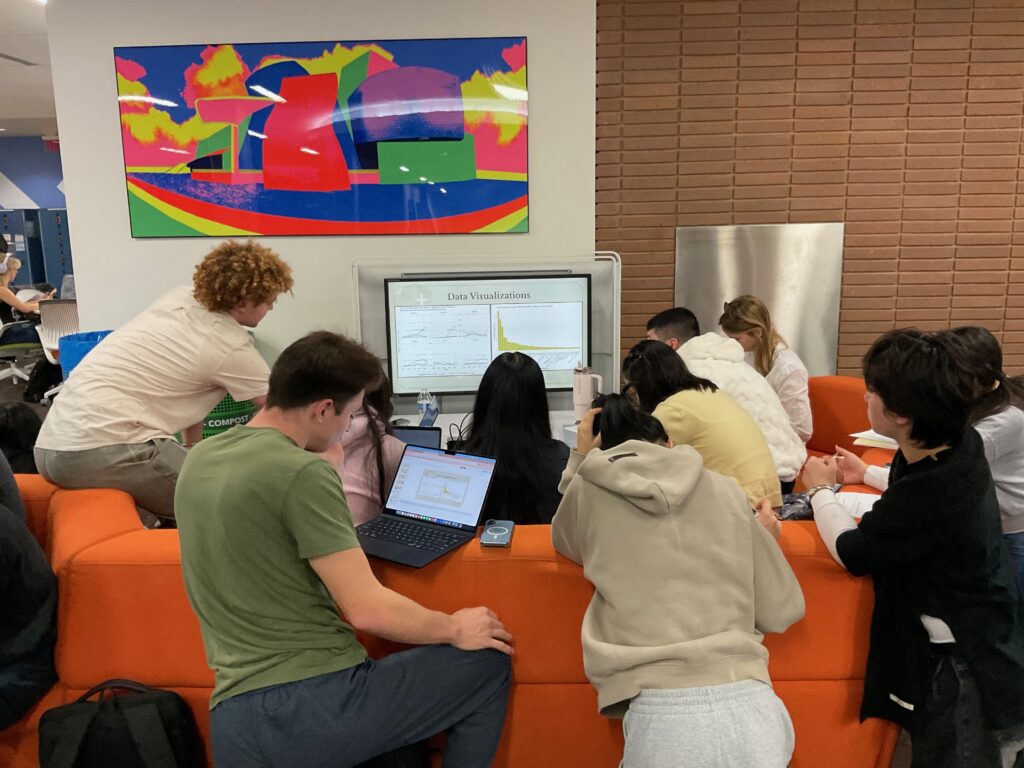
Through a combination of lecture and lab-based work, students learn to formulate humanistic research questions, work with basic principles of data modeling, analyze structured data, and use digital methods for visualization, mapping, and text analysis. They also evaluate the strengths and limitations of different platforms and approaches.
The course also emphasizes collaboration. Students work in teams to develop a digital research project, gaining experience in project design, research, and communication.
No prior technical experience is required.
Students complete four upper-division courses in Digital Humanities.
Students select courses that align with their interests while building a strong foundation in digital methods.
These courses span key areas of the field, including:
- computation and programming
- data modeling, database design, and visualization
- social media and digital society
- text analysis and encoding
- mapping and spatial analysis
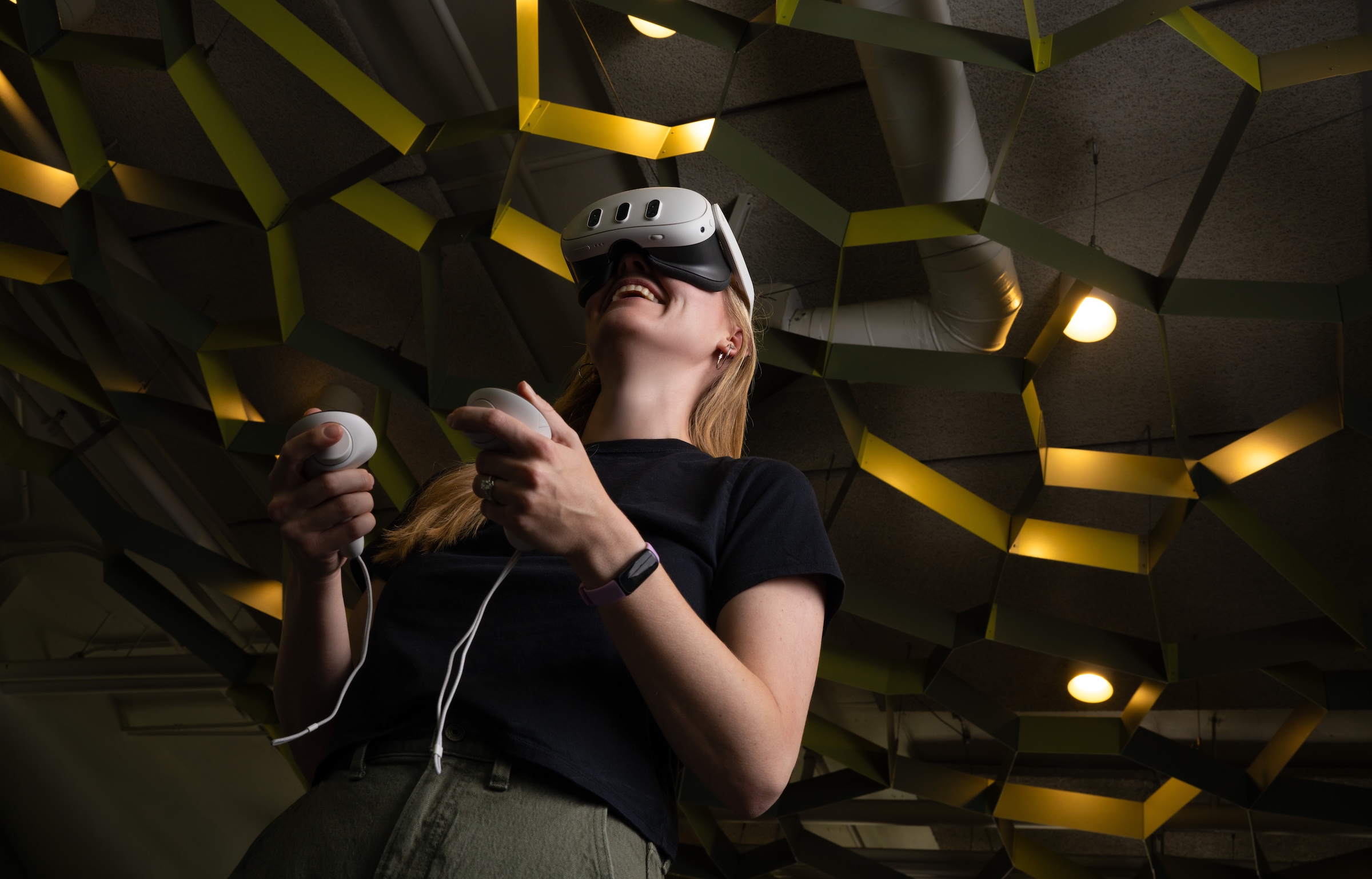
- modeling, immersive media, and virtual environments
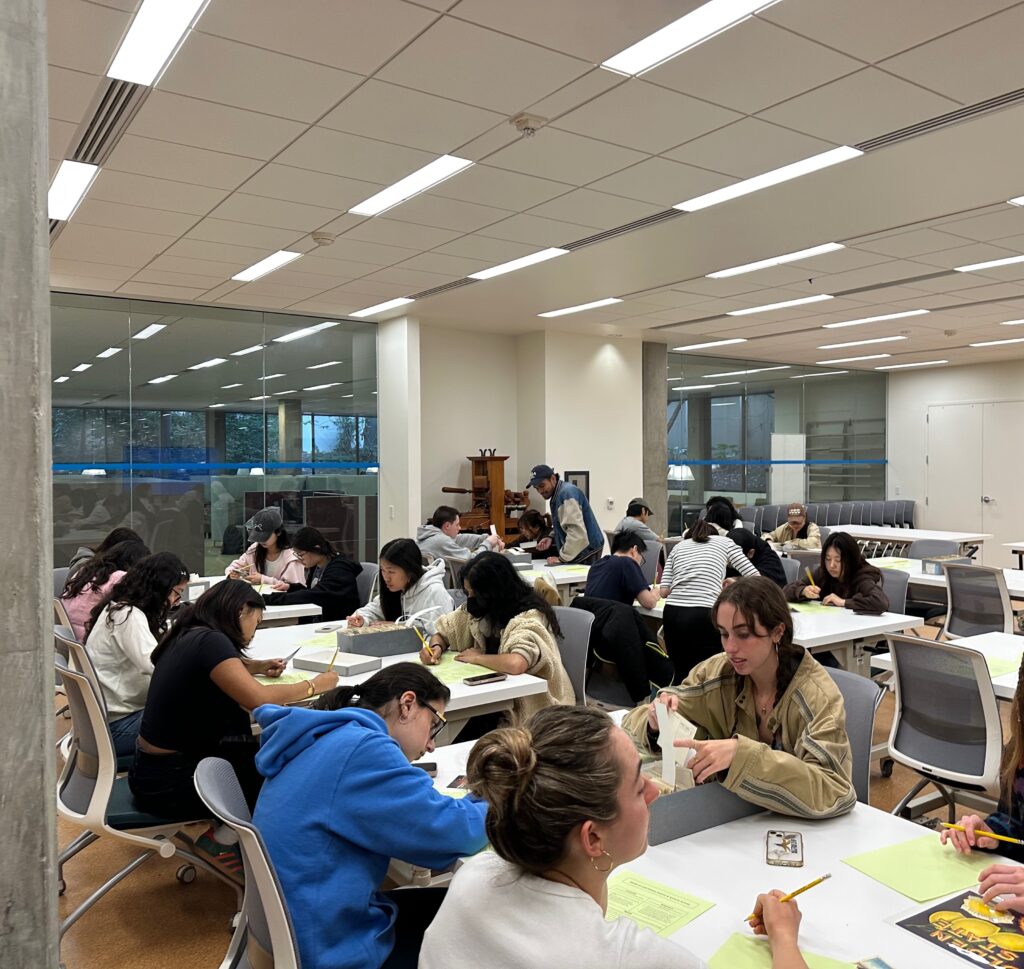
- digital archives and collections
Across these areas, students learn to use digital methods while questioning the histories, assumptions, and social structures built into them.
Students complete:
- two upper-division Humanities Core courses
- two additional upper-division electives
These courses give students room to deepen the humanistic side of the major and connect DH methods to the questions and materials they want to pursue.
Electives may be taken in Digital Humanities or in related interdisciplinary and computational fields, allowing students to tailor the major to their academic and professional goals.
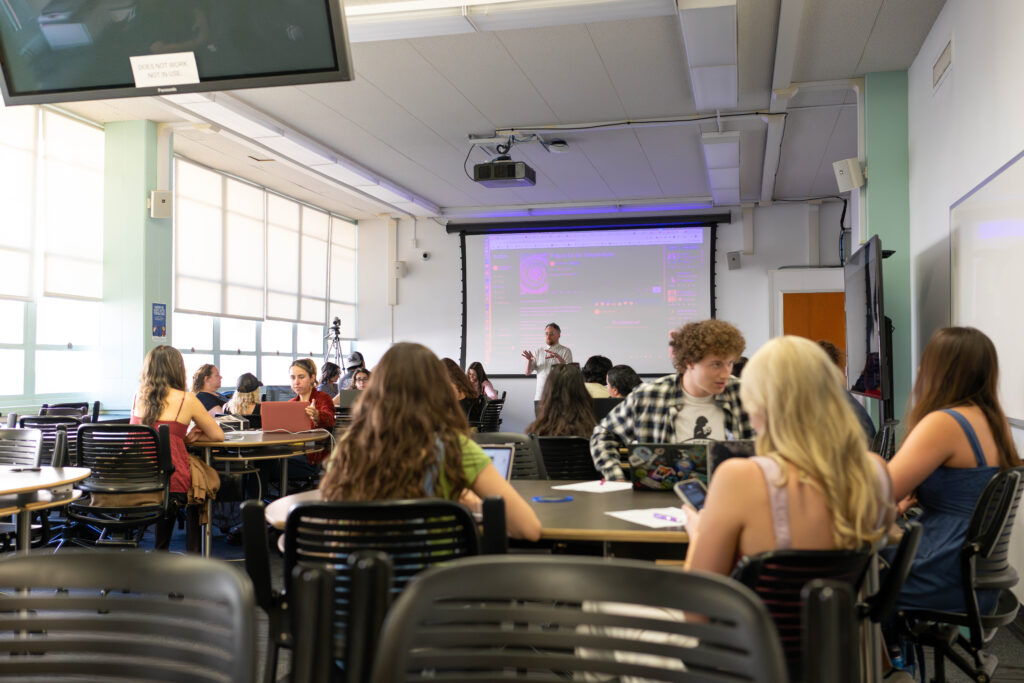
All students complete DH 187: Senior Capstone in Digital Humanities.
The capstone is a portfolio-driven course in which students synthesize work developed throughout the major into a digital portfolio for academic, professional, and public audiences.
In this course, students:
- curate and refine work from prior courses
- document and present their research and technical work
- develop professional materials such as resumes, CVs, and project descriptions
- prepare their work for public and professional audiences
The portfolio represents the culmination of the major. It demonstrates:
- technical and analytical skills
- the ability to design and interpret digital research
- a coherent body of work developed across courses
This portfolio supports future academic and professional opportunities.
Entry to the Major
The major requires 40 units of upper-division coursework.
To be admitted to the major, students must have completed both preparation courses for the major. A minimum grade of C or better is required for each preparation course for the major.
Students with a grade-point average less than 2.7 in the preparation coursework are not eligible for admission to the major.
To apply to the major or for questions regarding the major, please email SAO Deanna Finlay at deanna@humnet.ucla.edu.
Preparation for the Major:
One lower-division course chosen from each of the two areas: Humanistic Inquiry and Data Networks.